YSAGES
Culture · Indigenous peoples
A digital house for each Indigenous people to keep its own culture and teach it to the young, under that people's own rules.
- Client
- Donated by Quick Solutions to YSAGES
- Status
- Live, donated and competing at UNESCO
- Technology
- Next.js · Supabase (PostgreSQL) · Vercel
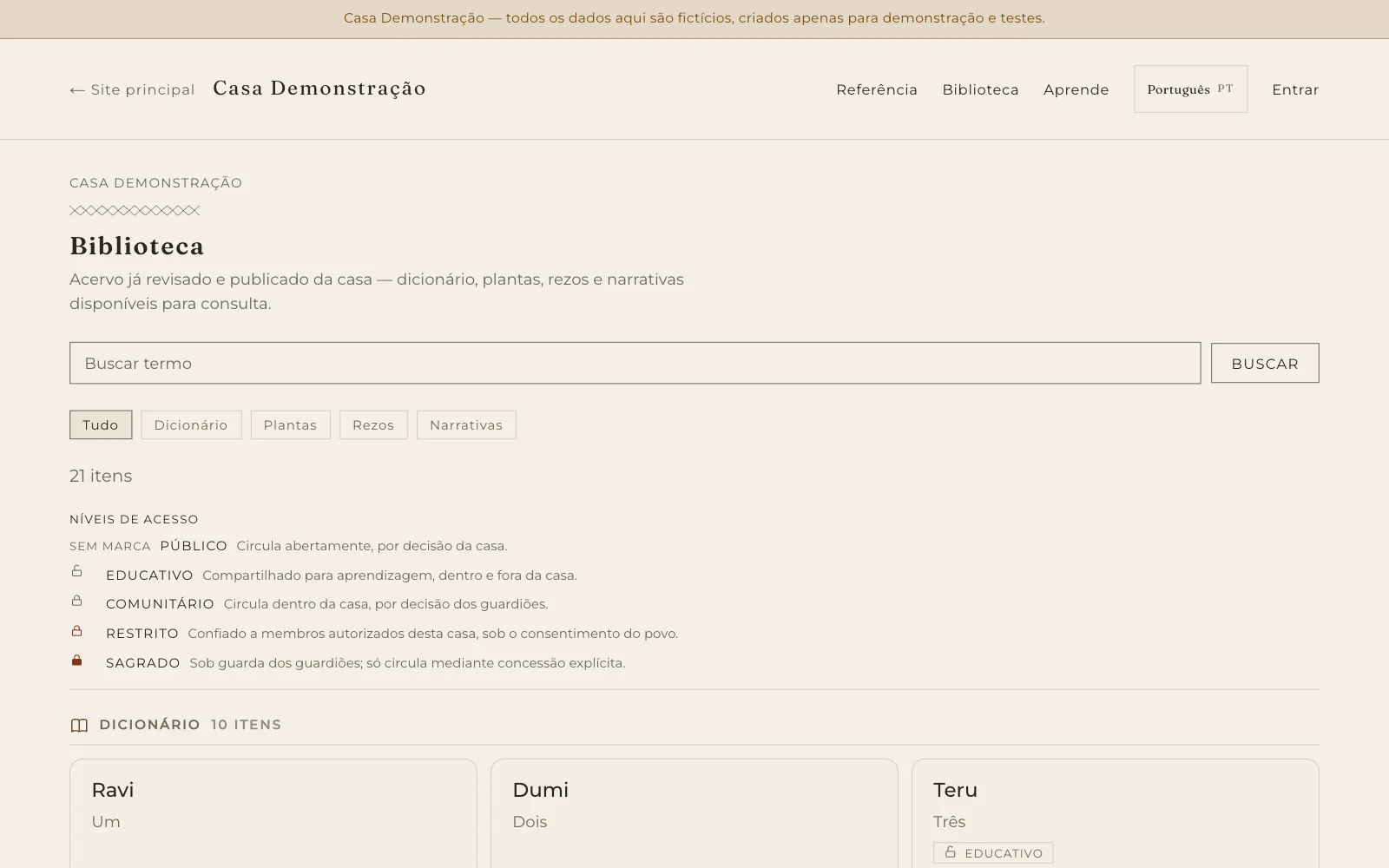
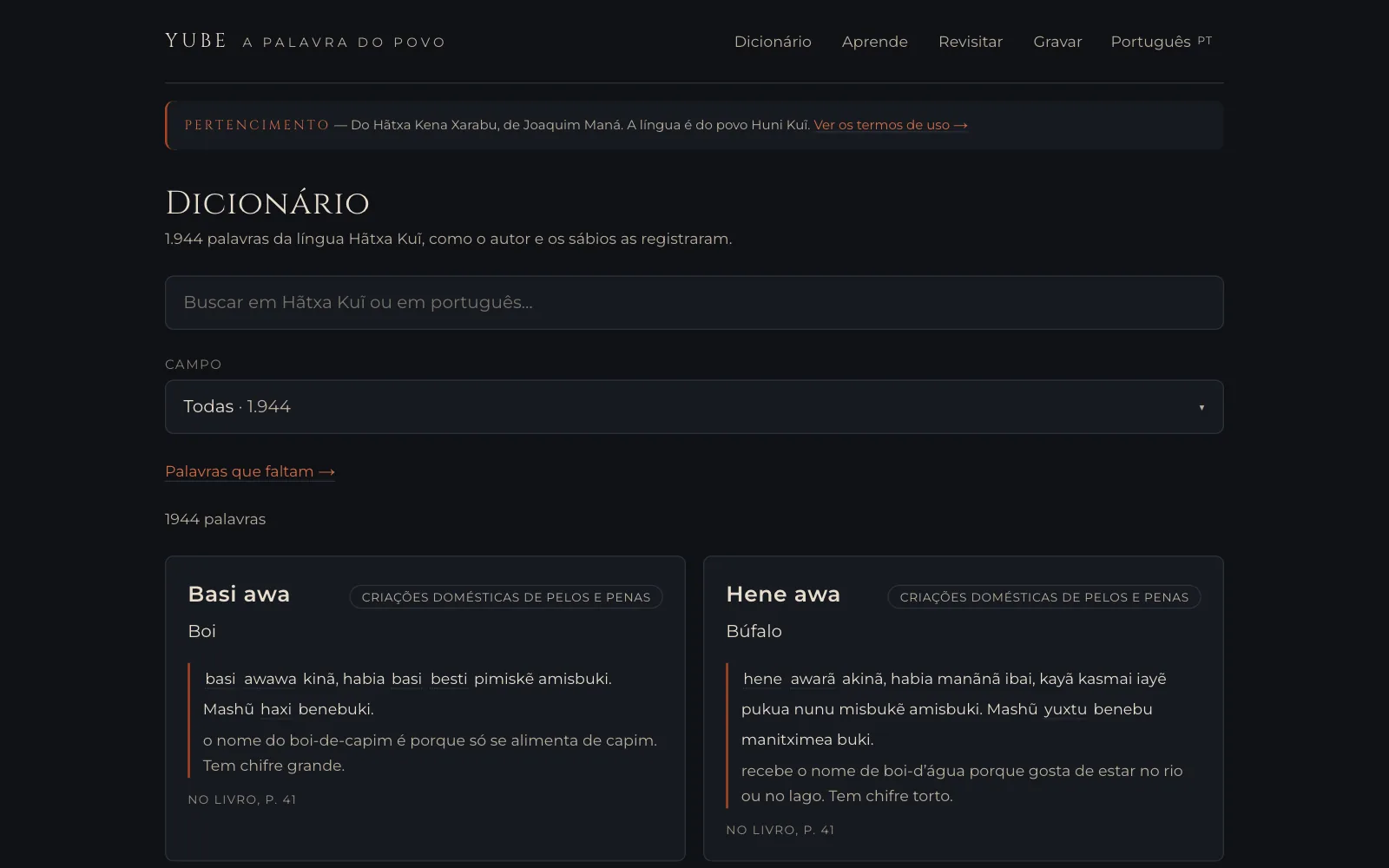
YSAGES is a network of cultural houses of Indigenous peoples, such as the Huni Kuĩ, the Guarani and the Noke Koĩ. We donated the platform that runs this network. In it, each people records its language, medicinal plants, prayer songs and stories, decides who can see each thing and turns the collection into study for the young. Two language apps grew out of it, and the Noke Koĩ one is competing in the New Commons Incubator, by UNESCO with GovLab and Microsoft.
Technology does not invent knowledge. A person always decides what enters the collection.
- screens
45
screens
- automated tests
2,500+
automated tests
- commits
1,755
commits
- interface languages, including Guarani and Ratxa Kuĩ
7
interface languages, including Guarani and Ratxa Kuĩ
What the system does | |
|---|---|
| 01 | One house for each people, with its own address, language and identity |
| 02 | A three-step path: Reference, Library and Learn |
| 03 | Guardian's consent recorded, revocable and approved by both sides |
| 04 | Five access levels, from public to sacred, with a log of every read of protected content |
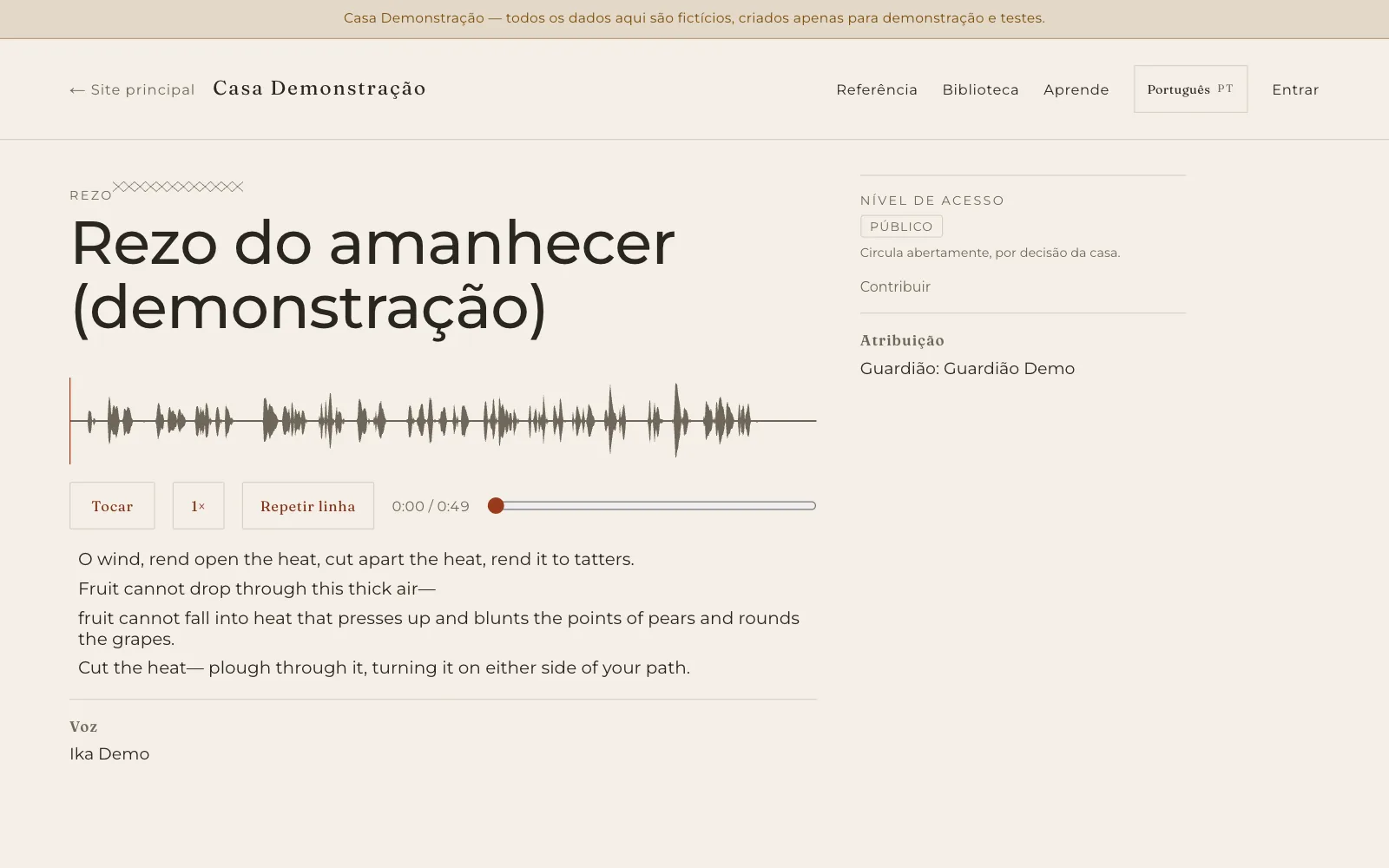
| 05 | Prayer songs with audio and lyrics synced line by line |
| 06 | Field collection with no signal, uploaded by itself when the connection returns |
| 07 | Two derived apps that work offline: kaxinawa.com.br, with 1,944 Huni Kuĩ words, and nokekoin.com.br, with 1,630 Noke Koĩ words |
Where AI comes in | |
|---|---|
| 01 | Help right on the screen: explains what can be done there, with its cost locked by a test |
| 02 | Source radar: the AI suggests research about each people, and the curator accepts or discards it |
| 03 | Reading dictionaries and books: the AI proposes word pairs and flags duplicates, for human review |
| 04 | The AI has no write access to the collection |
Why it exists
A culture only stays alive when it reaches the next generation.
Much of the knowledge of Indigenous peoples lives in the speech of the elders: words, prayer songs, forest remedies, origin stories. When the young stop listening, it is lost. And when outsiders record it, the people usually lose control of what is theirs. The platform takes care of both at once.
01Consent
The people say yes, and how far
Before anything is recorded, a named guardian gives consent and chooses who can see it. They can take it back.
02Reference
Knowledge is recorded at the source
Each word, prayer song, plant or story comes in with who said it, in what context and where it came from.
03Library
The collection is reviewed and kept
Curators review and classify each item. Every read of protected content is logged.
04Learn
Knowledge reaches the young
Paths, exercises and prayer songs with audio for the learners the community itself names.
Today's learner is tomorrow's guardian, and the cycle starts again.
What is lost without care, and what the platform guarantees
Keeping a people's culture is not just putting texts on the internet. These are the real risks, and the answer to each.
The elders
The voice, the word and the context are recorded with the name of who taught it.
Without care: When an elder passes, what only they knew goes with them.
Control
Nothing comes in without consent, and consent can be withdrawn.
Without care: Research and websites publish without asking, and the people no longer decide anything.
The sacred
The sacred stays closed even to the administrator. It only opens with the community’s recorded permission.
Without care: Initiation prayers and ceremonial secrets end up open to anyone.
AI
AI does not write to the collection. The people's word is never generated by a machine.
Without care: A model learns the language in pieces and starts inventing words.
The young
Study fits in a phone, works offline and respects the people's language.
Without care: Far from the village or without signal, they have nowhere to study.
YSAGES does not exist to store cultures. It exists to strengthen the relationships that keep them alive.